Best Kayak Motor: How to Choose the Best Electric Motor for Your Kayak
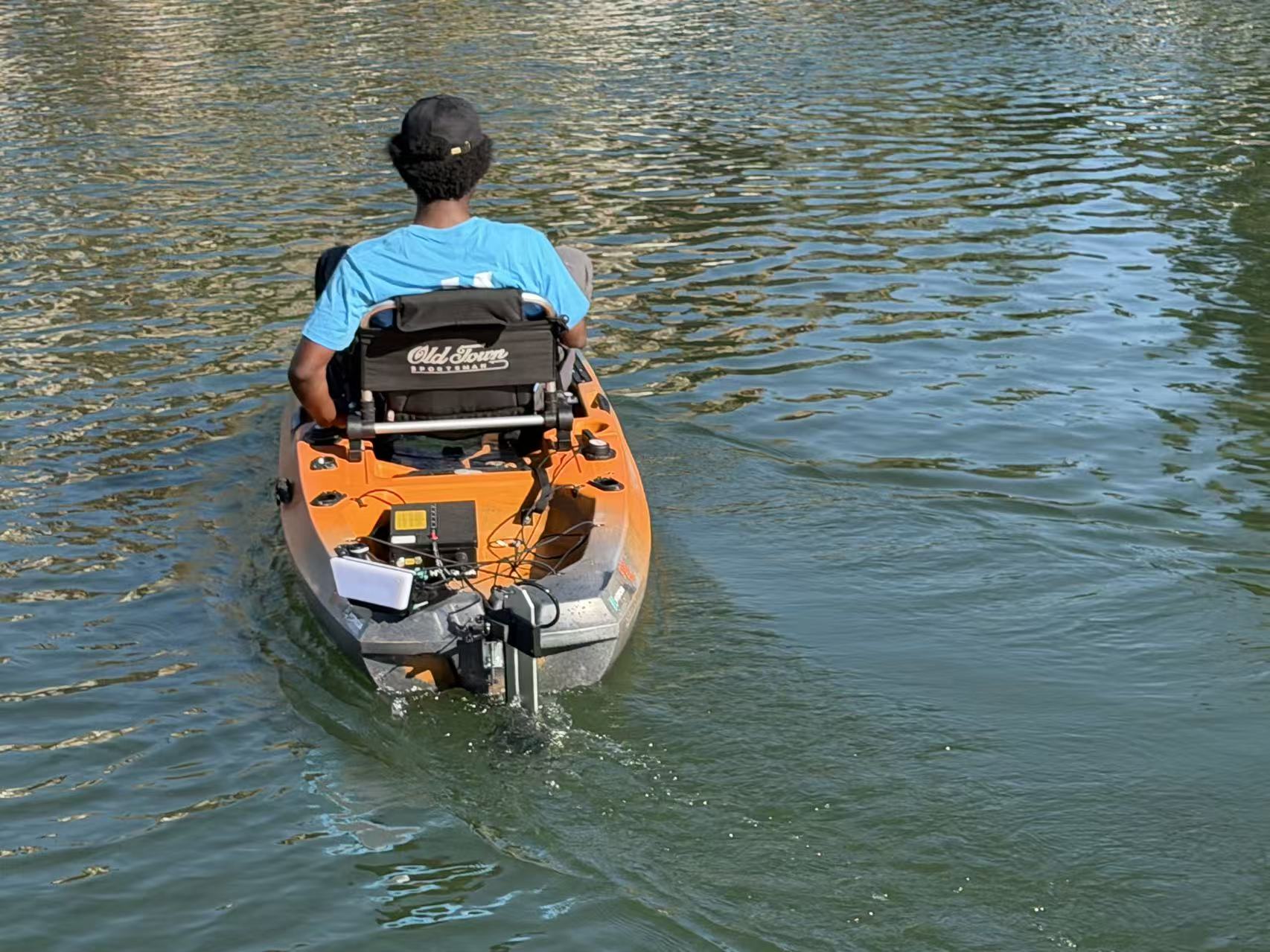
Best Kayak Motor: How to Choose the Right Electric Motor for Your Kayak
Choosing the best kayak motor can completely change the way you fish, explore, and travel on the water.
A good electric kayak motor helps you cover more distance, fight wind and current, return to shore more easily, and spend less energy paddling.
But not every motor works well for every kayak.
The best choice depends on your kayak size, fishing style, battery capacity, mounting position, and how portable you need the system to be.
In this guide, we’ll explain what to look for when choosing the best electric motor for a kayak.
Why Use an Electric Motor on a Kayak?
Kayaks are lightweight and efficient, but paddling long distances can become tiring, especially when fishing.
An electric kayak motor can make your setup much more capable.
A motor is especially useful for:
- Fishing large lakes
- Traveling longer distances
- Fighting wind and current
- Trolling while fishing
- Returning to shore after a long day
- Carrying extra fishing equipment
- Exploring areas that would otherwise take too long to reach
For many anglers, an electric motor turns a kayak into a much more practical fishing platform.
What Makes the Best Kayak Motor?
There is no single motor that is best for every kayak. The right motor should balance power, speed, battery life, portability, mounting compatibility, controls, and safety.
1. Motor Power
Power is one of the first things buyers look at.
Traditional trolling motors are often rated in pounds of thrust, while newer kayak motors may use watts or horsepower equivalents.
For lightweight kayaks, extremely high power is usually unnecessary.
A compact electric motor in the 500W to 1000W range can provide a strong balance between speed, efficiency, weight, and portability for many recreational and fishing kayaks.
The Hydrova YAK-1, for example, uses a 24V 750W electric platform designed for kayaks, SUPs, canoes, inflatables, and other small watercraft.
2. Speed
Many people search for the fastest kayak motor, but maximum speed is not always the most important factor.
Kayak hull design creates significant resistance as speed increases. This means doubling motor power does not necessarily double your speed.
For many 10 to 12 ft fishing kayaks, an electric motor capable of approximately 4 to 5 mph is already enough for:
- Fishing
- Trolling
- Moving between spots
- Returning to shore
- Exploring lakes and rivers
Your actual speed will depend on:
- Kayak hull shape
- Total weight
- Battery weight
- Wind
- Current
- Propeller design
- Motor mounting position
3. Battery Life
Battery capacity is extremely important when choosing a kayak motor.
Battery capacity is normally measured in amp-hours (Ah) or watt-hours (Wh).
For example, a 24V 32Ah battery contains approximately:
24 × 32 = 768Wh
Actual usable capacity may vary depending on battery design, battery management settings, and discharge limits.
A 750W motor running continuously at maximum power will use significantly more energy than the same motor operating at cruising speed.
That is why cruising range can be much longer than full-throttle runtime.
4. Portability
Weight matters much more on a kayak than on a traditional fishing boat.
A large trolling motor may provide plenty of power, but it can make launching, transporting, and storing the kayak much more difficult.
A good kayak motor should be:
- Compact
- Easy to remove
- Easy to carry
- Simple to install
- Compatible with portable batteries
5. Mounting Options
One of the biggest challenges when buying a kayak motor is mounting it properly.
Different kayaks use very different mounting systems.
Transom Mount
The motor is installed at the rear of the kayak. This is one of the simplest setups and works well on kayaks with a compatible stern or motor mount.
Pedal Drive Mount
Some pedal kayaks allow the motor to be installed through the existing pedal-drive opening.
This keeps the motor close to the center of the kayak and avoids adding a large bracket to the stern.
Rudder Mount
Some motor systems can use or replace the kayak’s existing rudder mounting location.
Side Mount
A side-mounted motor can be useful for kayaks without a dedicated stern mounting area.
Bow Mount
GPS trolling motors are increasingly being used on fishing kayaks.
A bow-mounted GPS motor can offer features such as position holding and directional control, although it normally requires a stronger mounting platform.
6. Forward and Reverse Control
A good fishing motor should provide both forward and reverse operation.
Multiple speed levels can make maneuvering much easier around docks, weed beds, shorelines, and fishing structure.
The Hydrova YAK-1 uses wireless control with multiple forward and reverse speed levels, allowing the motor to be controlled without a traditional tiller handle.
7. Safety Features
Safety should never be overlooked when choosing an electric kayak motor.
Useful safety features may include:
- Kill switch
- Man-overboard detection
- Wireless emergency stop
- Low-voltage protection
- Over-current protection
Wireless man-overboard detection can be particularly useful on small fishing kayaks because the motor can stop if the operator becomes separated from the vessel.
8. GPS Spot-Lock
For serious anglers, GPS position holding can be one of the most valuable motor features.
A GPS trolling motor can automatically make steering and power adjustments to help keep the kayak near a selected GPS position.
This can be useful when fishing:
- Drop-offs
- Weed lines
- Offshore structure
- River current
- Windy lakes
Instead of constantly correcting your kayak position, you can spend more time fishing.
Best Kayak Motor for Different Uses
Best Motor for Casual Kayaking
Look for:
- Lightweight design
- Simple controls
- Moderate power
- Portable battery
- Easy installation
You usually do not need a large GPS trolling motor for casual recreational use.
Best Motor for Kayak Fishing
Fishing kayaks benefit from:
- Forward and reverse
- Wireless control
- Long battery life
- Compact design
- Multiple mounting options
Best Motor for Long-Distance Kayaking
For longer trips, prioritize:
- High battery capacity
- Efficient motor design
- Lightweight propulsion
- Spare battery capability
Cruising efficiency is often more important than maximum speed.
Best Motor for Advanced Fishing
Serious kayak anglers may prefer:
- GPS position holding
- Remote steering
- Spot-Lock
- Heading control
- Bow or stern mounting options
Hydrova YAK-1 Electric Kayak Motor
The Hydrova YAK-1 was designed as a compact electric propulsion solution for kayaks and other lightweight watercraft.
Key specifications include:
- 24V electric platform
- 750W motor
- Up to approximately 5 MPH depending on the kayak and conditions
- Wireless remote control
- 4 forward speeds
- 4 reverse speeds
- Man-overboard detection
- Portable design
The YAK-1 can be used with multiple mounting solutions depending on the kayak.
Available installation concepts include:
- Pedal drive adaptor
- Rudder fin adaptor
- SUP adaptor
- Stern mounting solutions
This makes one motor platform suitable for many different kayak layouts.
What Size Motor Do I Need for a Kayak?
For most fishing kayaks, bigger is not automatically better.
A kayak has limited:
- Hull speed
- Payload capacity
- Battery storage
- Mounting strength
For many recreational and fishing kayaks, approximately 500W to 1000W provides a useful range of power without turning the kayak into an unnecessarily heavy system.
A heavy 13-foot fishing kayak carrying batteries, electronics, and fishing equipment may require more power than a lightweight 10-foot recreational kayak.
How Fast Can an Electric Kayak Motor Go?
Many motorized fishing kayaks operate somewhere around 3 to 5 mph, depending on the motor, kayak hull, total load, water conditions, and propeller.
More powerful systems may go faster, but kayak hull efficiency becomes increasingly important at higher speeds.
Speed should therefore be considered together with:
- Range
- Motor weight
- Battery weight
- Stability
- Efficiency
Is a 750W Motor Enough for a Kayak?
For many single-person recreational and fishing kayaks, 750W can provide a strong balance of portability and propulsion.
It can provide enough power for cruising, fishing, and moving between spots without requiring an extremely large motor or battery system.
Actual performance depends heavily on kayak hull design, total loaded weight, wind, current, battery condition, and mounting setup.
Final Thoughts
The best kayak motor is not necessarily the biggest or most powerful motor.
For most kayak owners, the ideal system combines:
Good speed + long range + low weight + easy installation + reliable control.
Casual users may prefer a lightweight portable motor, while serious anglers may benefit from GPS Spot-Lock and advanced remote control.
Before buying, always check your kayak’s mounting options, weight capacity, battery space, local boating requirements, and intended use.
A well-matched electric motor can turn a simple kayak into a much more capable platform for fishing and exploring.
Explore Hydrova Electric Kayak Motors
Designed for kayaks, SUPs, canoes, inflatables, and small boats.
Portable. Quiet. Electric.