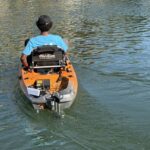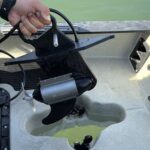
750W Kayak Motor: How Fast Can It Go?
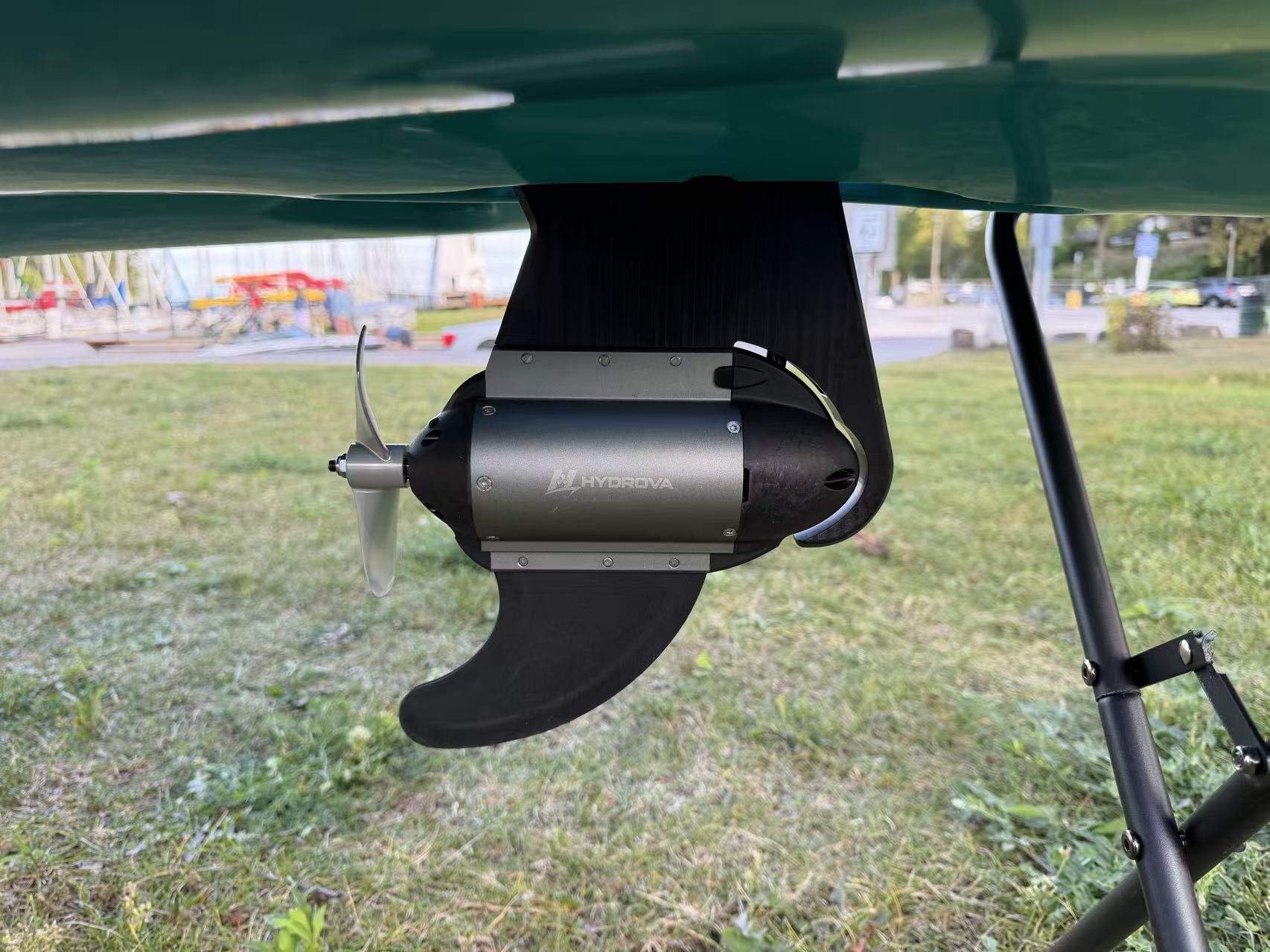
750W Kayak Motor: How Fast Can It Go?
A 750W kayak motor can provide a strong balance of speed, efficiency, portability, and battery life for recreational and fishing kayaks.
But how fast can a 750W electric kayak motor actually go?
The answer depends on much more than motor power alone. Kayak hull design, total weight, battery voltage, propeller efficiency, wind, current, and mounting position can all affect real-world speed.
In this guide, we’ll explain what you can realistically expect from a 750W kayak motor and what factors have the biggest impact on performance.
How Fast Is a 750W Kayak Motor?
A properly matched 750W electric kayak motor can provide impressive performance on lightweight watercraft.
In real-world testing, the Hydrova YAK-1 can reach:
- Up to 5 MPH on regular rigid kayaks
- Up to 5.5 MPH on lightweight inflatable kayaks
Actual speed depends on kayak hull design, total load, battery condition, wind, current, propeller setup, water conditions, and motor installation.
Some kayaks are designed for stability, while others have narrower and more efficient hulls. This can create a noticeable difference in top speed even when using the same motor.
What Does 750W Mean?
Watts measure electrical power.
A 750W motor is designed to operate at approximately 750 watts near maximum output.
For a 24V system, the approximate electrical current at 750W can be calculated using:
Current = Power ÷ Voltage
750W ÷ 24V = approximately 31.25 amps
Actual current draw may vary depending on motor efficiency, battery voltage, controller design, propeller load, and operating conditions.
Is 750W Powerful Enough for a Kayak?
For many single-person recreational and fishing kayaks, 750W provides a useful combination of power and portability.
A 750W kayak motor can be suitable for:
- Fishing
- Trolling
- Traveling between fishing spots
- Exploring lakes and rivers
- Handling moderate wind and current
- Returning to shore after a long fishing trip
- Reducing the amount of paddling required
One of the major advantages of a 750W system is that it can provide useful propulsion without requiring an extremely large motor or oversized battery.
750W Motor Speed by Kayak Type
Regular Rigid Kayaks
On a properly matched rigid kayak, the Hydrova YAK-1 can reach:
Up to 5 MPH
Performance depends on the kayak length, width, hull shape, total load, and water conditions.
Inflatable Kayaks
Lightweight inflatable kayaks can perform very well with compact electric propulsion systems.
In suitable conditions, the Hydrova YAK-1 can reach:
Up to 5.5 MPH on lightweight inflatable kayaks
The exact speed will depend on the inflatable kayak design, pressure, width, loading, and water conditions.
Fishing Kayaks
Fishing kayaks are often wider and heavier because they are designed for stability and equipment storage.
They may carry:
- Fishing rods
- Fish finders
- Battery systems
- Coolers
- Tackle boxes
- Anchoring equipment
Because of the additional weight and wider hull shape, a fully loaded fishing kayak may operate at a slightly lower speed than a lightweight recreational kayak.
Stand-Up Paddle Boards
Electric motors can also be used on compatible SUP platforms with the correct mounting adaptor.
SUP performance depends heavily on board width, rider weight, mounting location, fin configuration, and water conditions.
For many SUP users, portability and range may be more important than maximum speed.
Why Doesn’t More Power Always Mean More Speed?
It is easy to assume that doubling motor power will double kayak speed, but this is generally not how small watercraft behave.
As a kayak moves faster, water resistance increases.
This means that additional power may produce smaller and smaller increases in speed.
A 1500W motor, for example, does not automatically make the same kayak travel twice as fast as a 750W motor.
Hull design becomes one of the biggest limiting factors at higher speeds.
Factors That Affect 750W Kayak Motor Speed
1. Kayak Hull Design
Hull shape has a major effect on speed.
Longer and narrower kayaks are generally more efficient through the water, while wider fishing kayaks prioritize stability.
Two kayaks using the exact same motor can therefore have noticeably different top speeds.
2. Total Weight
Total operating weight includes:
- The kayak
- The operator
- The motor
- The battery
- Fishing equipment
- Coolers
- Electronics
- Additional accessories
A heavily loaded kayak will normally accelerate more slowly and may have a lower maximum speed.
3. Battery Voltage
The motor should always be paired with the correct battery voltage.
The Hydrova YAK-1 operates on a 24V electric platform.
Using the correct battery system helps ensure reliable motor operation and proper performance.
4. Propeller Design
Propeller diameter, blade shape, pitch, and motor RPM all affect performance.
Some propellers are optimized for stronger low-speed thrust, while others may provide better efficiency at higher speeds.
5. Wind
Wind can significantly affect kayak speed.
A strong headwind increases resistance and can reduce top speed and range.
A tailwind may improve speed, while crosswinds can require steering corrections.
6. Water Current
Water current can dramatically change GPS speed.
For example, if your kayak moves at 5 MPH through the water while traveling against a 2 MPH current, your approximate speed over the ground may only be 3 MPH.
Traveling with the same current may increase your GPS ground speed.
7. Motor Mounting Position
Motor depth, alignment, mounting angle, and installation position can affect efficiency.
A poorly aligned motor can create unnecessary drag and reduce speed.
The motor should be mounted securely and aligned as straight as possible with the direction of travel.
How Long Can a 750W Kayak Motor Run?
Motor runtime depends primarily on battery capacity and throttle level.
A simple theoretical example can be calculated using a 24V 32Ah battery:
24V × 32Ah = 768Wh
If the motor consumed a continuous 750W:
768Wh ÷ 750W = approximately 1.02 hours
This is only a theoretical calculation and should not be treated as guaranteed real-world runtime.
Actual runtime can vary because of:
- Battery management system limits
- Battery chemistry
- Motor efficiency
- Temperature
- Propeller load
- Battery voltage drop
- Kayak weight
- Wind and current
- Throttle setting
Full Speed vs Cruising Speed
Maximum throttle provides maximum speed, but it also uses significantly more battery power.
For fishing and general cruising, users rarely need to operate at maximum power continuously.
Lower-speed operation is useful for:
- Trolling
- Searching for fish
- Moving around structure
- Traveling short distances
- Conserving battery capacity
- Extending overall range
Cruising at moderate power can significantly improve operating time compared with continuous full-throttle operation.
How Far Can a 750W Kayak Motor Travel?
Range depends on cruising speed, power consumption, battery capacity, and water conditions.
For example, if a kayak travels at an average GPS speed of 3 MPH for 4 hours:
3 MPH × 4 hours = 12 miles
This is only an example. Actual range can vary significantly.
Wind, current, kayak weight, battery capacity, temperature, and throttle level can all affect how far you can travel.
When planning longer trips, always keep enough battery capacity in reserve to safely return to shore.
750W vs 500W Kayak Motor
Compared with a 500W electric motor, a 750W motor generally provides more available propulsion power.
Potential advantages include:
- Stronger acceleration
- Better performance on heavier kayaks
- More ability to handle wind and current
- Higher available thrust
- Potentially higher top speed
However, a 750W motor can also consume more battery power when operating at maximum output.
750W vs 1000W Kayak Motor
A 1000W motor provides more available electrical power than a 750W system.
However, this does not necessarily create a dramatic increase in top speed on every kayak.
At higher speeds, hull resistance becomes increasingly important.
A 750W system can therefore provide a strong balance for users who care about:
- Portability
- Battery size
- Motor weight
- Range
- Useful cruising speed
- Fishing performance
Hydrova YAK-1 750W Kayak Motor
The Hydrova YAK-1 is built around a portable 24V 750W electric propulsion platform designed for kayaks, SUPs, canoes, inflatables, and other small watercraft.
Key features include:
- 750W electric motor
- 24V electric platform
- Up to 5 MPH on regular rigid kayaks
- Up to 5.5 MPH on lightweight inflatable kayaks
- Wireless remote control
- 4 forward speed levels
- 4 reverse speed levels
- Man-overboard detection
- Portable design
- Multiple mounting adaptor options
The YAK-1 is designed to provide flexible installation options for different kayak layouts.
Depending on the watercraft, available mounting solutions can include:
- Pedal drive adaptor
- Rudder fin adaptor
- SUP adaptor
- Stern mounting solutions
Is 5 MPH Fast on a Kayak?
For a kayak, 5 MPH can feel surprisingly quick.
Many recreational paddlers travel considerably slower when using paddle power alone.
An electric motor capable of moving a kayak at approximately 5 MPH can significantly reduce travel time between fishing locations.
On a lightweight inflatable kayak, speeds of up to 5.5 MPH can provide even faster transportation between fishing areas under suitable conditions.
For many anglers, however, maximum speed is not the only consideration.
Range, control, reliability, portability, and battery efficiency can be equally important.
Is a 750W Motor Good for Fishing?
A 750W electric motor can be a strong option for kayak fishing because it provides useful propulsion while remaining compact enough for portable setups.
It can be especially useful for anglers who want:
- Less paddling
- More time fishing
- Wireless motor control
- Better mobility between fishing locations
- Long-distance capability
- Better performance in changing water conditions
What Battery Is Best for a 750W Kayak Motor?
Battery selection depends on how long you plan to stay on the water and how frequently you operate at high power.
A 24V lithium battery is commonly used with 24V kayak propulsion systems because lithium batteries can offer good energy density and lower weight compared with many traditional battery types.
Before selecting a battery, check:
- Voltage compatibility
- Amp-hour capacity
- Maximum continuous discharge current
- BMS specifications
- Battery weight
- Water resistance
- Charging requirements
Can You Put a 750W Motor on a Fishing Kayak?
Yes, many fishing kayaks can support a 750W motor when the motor and mounting system are properly matched to the kayak.
Before installation, check:
- The kayak manufacturer’s weight capacity
- The strength of the mounting area
- Battery placement
- Motor clearance
- Propeller clearance
- Steering setup
- Local boating regulations
Different kayak models may require different adaptors or mounting solutions.
What Is the Best Speed for Kayak Fishing?
Maximum speed is useful when traveling between locations, but fishing often happens at much lower speeds.
Low-speed control is useful for:
- Trolling lures
- Working shorelines
- Fishing around docks
- Following weed lines
- Approaching structure quietly
This is why having multiple forward and reverse speed levels can be useful on a fishing kayak.
Frequently Asked Questions
How fast can the Hydrova YAK-1 go?
The Hydrova YAK-1 can reach up to 5 MPH on regular rigid kayaks and up to 5.5 MPH on lightweight inflatable kayaks under suitable conditions.
Is 750W enough for a fishing kayak?
For many single-person fishing kayaks, 750W can provide a useful balance of propulsion power, speed, battery requirements, and portability.
Does a 750W motor equal 1 horsepower?
One mechanical horsepower is approximately 746 watts, but electric input wattage and mechanical shaft output are not exactly the same because every motor system has efficiency losses.
For that reason, wattage and horsepower should not always be treated as directly interchangeable when comparing different marine propulsion systems.
Will a larger battery make the kayak faster?
A larger-capacity battery normally increases runtime rather than top speed, assuming both batteries provide the correct voltage and sufficient discharge current.
Can a 750W motor be used on an inflatable kayak?
Yes, when the inflatable kayak has a compatible and properly reinforced mounting solution.
Lightweight inflatable kayaks may achieve speeds of up to approximately 5.5 MPH with the Hydrova YAK-1 under favorable conditions.
Final Thoughts
A 750W kayak motor can provide a strong combination of speed, portability, and usable power for many recreational and fishing applications.
With the Hydrova YAK-1, real-world performance can reach:
- Up to 5 MPH on regular rigid kayaks
- Up to 5.5 MPH on lightweight inflatable kayaks
Motor wattage is only one part of the performance equation.
Hull design, total weight, battery setup, propeller efficiency, mounting position, wind, and current all influence actual speed and range.
For many kayak anglers, a 750W motor provides a practical balance between:
Speed + portability + range + battery size + control.
Explore the Hydrova YAK-1 Electric Kayak Motor
Portable electric propulsion designed for kayaks, SUPs, canoes, inflatables, and small boats.
24V | 750W | Up to 5 MPH on Regular Kayaks | Up to 5.5 MPH on Lightweight Inflatable Kayaks