Best GPS Spot-Lock Trolling Motor for Kayaks in 2026
Best GPS Spot-Lock Trolling Motor for Kayaks in 2026
Instead of constantly paddling, steering, or dropping a physical anchor, a GPS trolling motor can automatically help keep your kayak near a selected fishing location.
But not every GPS trolling motor is ideal for a kayak.
Kayak anglers need to consider motor weight, battery requirements, mounting compatibility, GPS performance, steering response, portability, and total kayak capacity.
In this guide, we’ll explain what to look for when choosing the best GPS Spot-Lock trolling motor for a kayak in 2026.
What Is a GPS Spot-Lock Trolling Motor?
A GPS Spot-Lock trolling motor is an electric motor that uses GPS positioning and electronic steering to help maintain a selected position on the water.
When position holding is activated, the system monitors the kayak’s location and automatically makes steering and power adjustments when the kayak begins to drift.
This feature is especially useful for:
- Kayak fishing
- Offshore structure fishing
- Vertical jigging
- Fishing in wind
- Fishing in current
- Deep-water fishing
Why GPS Spot-Lock Is Useful on a Kayak
Kayaks are lightweight compared with traditional fishing boats.
That makes them easy to transport, but it also means they can drift very quickly.
Even moderate wind or current can move a kayak away from a productive fishing spot.
A GPS trolling motor can automatically help correct that drift.
Instead of spending time controlling the kayak, the angler can spend more time:
- Casting
- Jigging
- Watching electronics
- Landing fish
- Changing tackle
What Should You Look for in a Kayak GPS Trolling Motor?
The best GPS trolling motor for a kayak should balance technology with portability.
Important features include:
- GPS position holding
- Reliable electronic steering
- Remote control
- Suitable motor power
- Reasonable motor weight
- Efficient battery use
- Kayak mounting compatibility
- Bow or stern installation options
- Easy deployment and retrieval
1. GPS Position Holding
Position holding is the core feature of a GPS trolling motor.
When activated, the motor records the current GPS location and automatically tries to keep the kayak near that point.
This is often called:
- Spot-Lock
- GPS Anchor
- Position Hold
- Virtual Anchor
Exact terminology can vary between manufacturers.
2. Remote Steering
Remote steering is extremely useful on a kayak.
A traditional tiller handle can be difficult to reach when the motor is mounted at the bow or stern.
A wireless remote allows the angler to control the motor from the normal seated position.
Depending on the system, remote functions may include:
- Left steering
- Right steering
- Speed adjustment
- Motor start and stop
- Spot-Lock activation
- Heading functions
3. Bow and Stern Mounting Options
Mounting flexibility is especially important for kayaks.
Some kayaks have a strong bow mounting location, while others are easier to motorize from the stern.
A flexible GPS trolling motor system may support:
- Bow mounting
- Stern mounting
- Transom-style mounting
- Kayak-specific mounting adaptors
This makes it easier to adapt the same motor concept to different kayak designs.
4. Motor Weight
Weight matters much more on a kayak than on a traditional fishing boat.
The total propulsion system may include:
- Motor
- Mounting bracket
- Battery
- Power cables
- Remote control
A heavy system can reduce kayak performance and make launching more difficult.
Always consider the kayak manufacturer’s total weight capacity.
5. Motor Power
The motor must have enough power to control the kayak in realistic fishing conditions.
The right amount of power depends on:
- Kayak size
- Kayak weight
- Angler weight
- Fishing equipment
- Wind
- Current
More power can provide stronger corrections in wind and current, but it may also increase battery requirements and overall weight.
6. Battery Requirements
GPS trolling motors consume battery power both when traveling and while holding position.
In calm conditions, position holding may require only occasional motor corrections.
In stronger wind or current, the motor may operate much more frequently.
When choosing a battery, consider:
- Motor voltage
- Battery capacity
- Continuous discharge current
- Battery weight
- Expected fishing time
7. Heading Control
Heading control is different from GPS position holding.
Spot-Lock helps keep the kayak near one GPS location.
Heading control helps maintain the direction the kayak is facing.
This can be useful when casting toward:
- A shoreline
- A weed edge
- A dock
- A rock pile
- A specific underwater target
8. Easy Deployment
A trolling motor should be easy to deploy and retrieve from a kayak.
This matters when:
- Launching from shore
- Entering shallow water
- Approaching a boat ramp
- Transporting the kayak
A motor that is difficult to raise can become inconvenient during every fishing trip.
9. Propeller Clearance
Propeller depth should be sufficient for good thrust but not so deep that it becomes vulnerable in shallow water.
The correct depth depends on the kayak and mounting system.
Make sure the propeller has clearance from:
- The kayak hull
- Rudder hardware
- Fishing line
- Shallow bottom structure
10. Portability
Many kayak anglers transport their kayak using:
- SUVs
- Pickup trucks
- Roof racks
- Small trailers
A removable GPS trolling motor can make transportation significantly easier.
A quick-release mounting system can allow the motor to be removed while leaving the mounting base attached to the kayak.
Best GPS Trolling Motor Setup for Open-Water Fishing
Open-water anglers may benefit from:
- GPS position holding
- Strong steering response
- Adequate motor power
- Long battery runtime
- Remote control
These features can make it easier to stay over underwater structure or maintain position while vertical jigging.
Best GPS Trolling Motor Setup for Windy Conditions
Wind can cause a lightweight kayak to drift quickly.
In windy conditions, motor power and steering response become especially important.
The system must be able to detect movement and apply enough thrust to correct the position.
Stronger wind will also increase battery consumption.
Best GPS Trolling Motor Setup for Current
Current can place a continuous load on the motor.
A motor used in current should have enough available thrust to hold the kayak against the water movement.
Battery capacity should also be considered carefully because the motor may operate continuously while holding position.
Bow Mount GPS Trolling Motor
Bow mounting is widely used for GPS trolling motors.
The motor pulls the kayak toward the desired location, which can provide strong directional control.
Bow mounting can be especially useful for:
- Spot-Lock
- Heading control
- Open-water fishing
- Offshore structure
However, many kayaks require a dedicated bow mounting adaptor.
Stern Mount GPS Trolling Motor
Stern mounting can provide a simpler installation on many kayaks.
The motor pushes the kayak from the rear while electronic steering controls the direction.
Advantages may include:
- Keeping the bow clear
- Using existing rear mounting locations
- Simple access to mounting hardware
- Familiar rear-propulsion layout
A stern-mounted GPS motor must be designed and configured correctly for rear operation.
GPS Trolling Motor vs Traditional Trolling Motor
| Feature | GPS Trolling Motor | Traditional Trolling Motor |
|---|---|---|
| GPS Position Holding | Yes | Usually no |
| Automatic Steering | Available | Usually manual |
| Remote Control | Common | Depends on model |
| Complexity | Higher | Lower |
| Fishing Position Control | Advanced | Manual |
GPS Trolling Motor vs Traditional Anchor
GPS position holding can provide many of the benefits of anchoring without physically contacting the bottom.
This makes it especially useful when:
- Fishing deep water
- Moving between spots frequently
- Fishing offshore structure
- Fishing where dropping an anchor is inconvenient
However, a traditional anchor does not consume battery power and can still be a useful backup.
Can a GPS Trolling Motor Replace a Physical Anchor?
In many fishing situations, GPS position holding can greatly reduce how often you need to deploy a traditional anchor.
However, it should not necessarily be considered a complete replacement in every situation.
Carrying a backup anchoring method can still be useful for:
- Battery failure
- Long-duration stationary fishing
- Emergency situations
- Conditions beyond motor capability
Hydrova Travel GPS Spot-Lock Trolling Motor
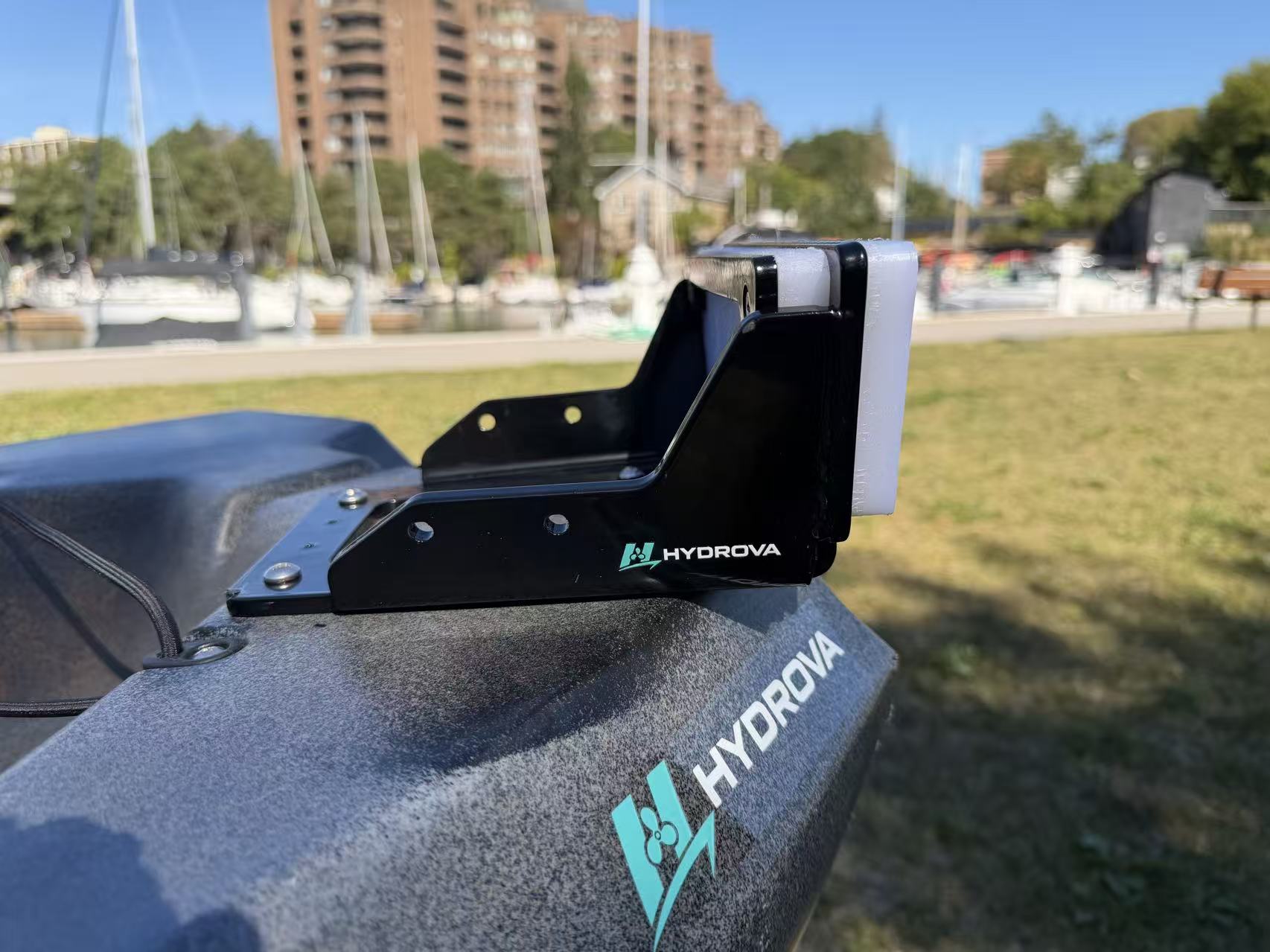
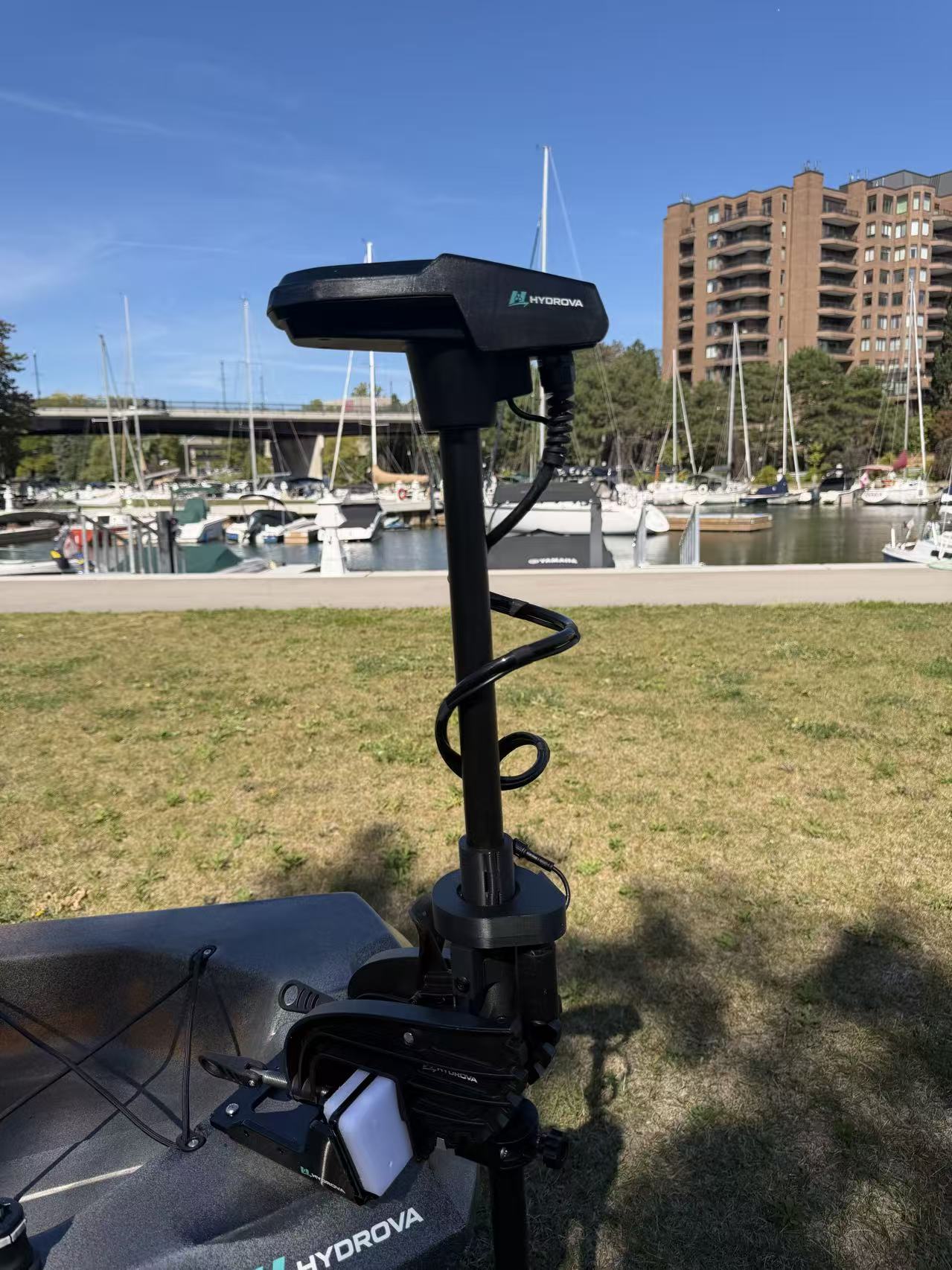
The Hydrova Travel GPS Spot-Lock Trolling Motor is designed for kayak and small-boat anglers who want advanced electric positioning in a flexible installation platform.
The system is designed around:
- GPS position holding
- Remote steering
- Electric propulsion
- Bow or stern installation capability for compatible setups
- Kayak and small-boat applications
Depending on the kayak model and mounting position, a dedicated mounting adaptor may be required.
This flexible mounting approach is designed to make advanced GPS motor control available to more types of fishing kayaks.
Who Is a GPS Spot-Lock Motor Best For?
A GPS trolling motor can be especially useful for anglers who:
- Fish large lakes
- Fish offshore structure
- Fish deep water
- Fish in wind
- Fish in current
- Use fish finders to target precise locations
- Want to spend less time manually controlling the kayak
Who May Not Need Spot-Lock?
A simpler electric motor may be enough if you mostly fish:
- Small ponds
- Protected bays
- Calm water
- Short distances
- Very shallow water
In these situations, lower weight and simpler installation may be more valuable than advanced GPS features.
How Much Battery Does Spot-Lock Use?
Battery consumption varies dramatically depending on conditions.
In calm water, the motor may only make occasional corrections.
In strong wind or current, the motor may need to operate frequently or continuously.
This means anglers who frequently use Spot-Lock in difficult conditions may benefit from a larger battery capacity.
Does GPS Accuracy Matter?
Yes.
Position-holding performance depends partly on the quality of the GPS location data.
Other factors also affect overall accuracy, including:
- Motor response
- Steering speed
- Wind
- Current
- Kayak size
- Motor mounting position
No GPS trolling motor keeps a kayak perfectly motionless at all times.
The system continually detects drift and makes corrections around the selected location.
Can You Install a GPS Trolling Motor on Any Kayak?
Not every kayak is ready for a trolling motor without modification.
Before installation, check:
- Kayak payload capacity
- Mounting strength
- Motor clearance
- Battery location
- Weight distribution
- Propeller clearance
- Local boating requirements
Some kayaks may require a dedicated adaptor or mounting plate.
Frequently Asked Questions
What is the best Spot-Lock trolling motor for a kayak?
The right motor depends on kayak size, total weight, water conditions, battery requirements, mounting compatibility, and the GPS features you need.
Is GPS Spot-Lock worth it for kayak fishing?
It can be especially useful for anglers who fish in wind, current, deep water, or around precise offshore structure.
Can a GPS trolling motor be mounted at the stern?
Yes, when the motor system is designed and configured for stern installation.
Is bow mounting better for Spot-Lock?
Bow mounting is widely used because pulling the kayak can provide strong directional control, but a properly designed stern-mounted system can also provide GPS position holding.
Does Spot-Lock work in wind?
Yes. The motor can automatically apply steering and thrust corrections as the kayak drifts away from the selected GPS position.
Does Spot-Lock work in current?
Yes, as long as the motor has enough available power to overcome the current.
Do you still need a paddle?
Yes. A paddle should remain available as a backup even when your kayak is equipped with an electric trolling motor.
Final Thoughts
The best GPS Spot-Lock trolling motor for a kayak should do more than simply provide motor power.
A good system should combine:
- Reliable GPS position holding
- Responsive electronic steering
- Remote control
- Reasonable weight
- Efficient battery use
- Flexible mounting options
For serious anglers, GPS position holding can transform the fishing experience by reducing the amount of time spent controlling the kayak.
Instead of constantly correcting your position, you can focus on:
Finding fish. Holding the spot. Making the next cast.
Explore Hydrova Travel GPS Spot-Lock
Advanced GPS position holding and electric propulsion designed for kayaks and small boats.
Hold Your Position. Focus on Fishing.