Spot-Lock vs Traditional Anchor: Which Is Better for Kayak Fishing?
Spot-Lock vs Traditional Anchor: Which Is Better for Kayak Fishing?
When fishing from a kayak, staying in the right position can be just as important as getting to the right location.
Traditionally, anglers have used physical anchors to hold a kayak in place. Today, GPS trolling motors with Spot-Lock or GPS anchor functions offer another option.
Both systems can help control your position, but they work in very different ways.
In this guide, we’ll compare Spot-Lock vs a traditional anchor for kayak fishing and explain the advantages and limitations of each system.
What Is Spot-Lock?
Spot-Lock is a GPS-based position-holding feature found on advanced trolling motors.
When activated, the motor records your current GPS position and automatically adjusts steering and motor power to help keep the kayak near that location.
If wind or current moves the kayak away from the selected point, the motor makes automatic corrections.
This allows the angler to focus more on fishing instead of constantly steering or paddling.
What Is a Traditional Kayak Anchor?
A traditional anchor uses physical weight or holding power to connect the kayak to the bottom.
Common kayak anchor systems include:
- Small folding anchors
- Grapnel anchors
- Drag chains
- Stake-out poles
- Anchor trolleys
Once deployed, the anchor helps prevent the kayak from drifting with wind or current.
Spot-Lock vs Anchor: Quick Comparison
| Feature | Spot-Lock | Traditional Anchor |
|---|---|---|
| Position Holding | GPS-controlled | Physical bottom contact |
| Deployment | Electronic | Manual |
| Retrieval | Instant | Manual |
| Battery Use | Yes | No |
| Deep Water | Very useful | Requires enough anchor line |
| Moving Between Spots | Fast | Slower |
| Weight | Motor and battery required | Anchor and rope required |
1. Convenience
One of the biggest advantages of Spot-Lock is convenience.
With a traditional anchor, you may need to:
- Prepare the anchor rope
- Drop the anchor
- Wait for it to hold
- Adjust your anchor trolley
- Pull the anchor back up
With GPS position holding, you can usually activate the function electronically.
This makes it much easier to move between multiple fishing spots.
2. Fishing Multiple Spots
Spot-Lock can be especially useful for anglers who move frequently throughout the day.
For example, you may fish:
- One offshore rock pile
- Then move to a drop-off
- Then move to a weed line
- Then return to the original structure
With a GPS trolling motor, you can stop and hold position without repeatedly deploying an anchor.
A traditional anchor is often better suited to situations where you plan to remain in one place for a longer period.
3. Fishing in Deep Water
Deep water can make physical anchoring more complicated.
A traditional anchor requires enough line to reach the bottom and provide a suitable anchor angle.
In deeper water, this means carrying more rope and spending more time deploying and retrieving the anchor.
Spot-Lock does not need to contact the bottom, making it especially useful in deeper water.
4. Fishing Offshore Structure
GPS position holding is extremely useful when fishing a small target in open water.
Examples include:
- Rock piles
- Brush piles
- Drop-offs
- Submerged points
- Sunken trees
- Artificial reefs
A GPS trolling motor can help keep the kayak near the target without requiring a physical anchor to contact the bottom.
5. Fishing in Wind
Wind is one of the biggest challenges for kayak anglers.
Because kayaks are lightweight, they can drift quickly even in moderate wind.
Spot-Lock can automatically make steering and power corrections as the wind pushes the kayak away.
A physical anchor can also hold the kayak in wind, but the kayak may swing around the anchor point depending on wind direction and anchor setup.
6. Fishing in Current
Both Spot-Lock and traditional anchors can work in current, but they behave differently.
A traditional anchor can hold the kayak in one location without consuming battery power.
A GPS trolling motor must continuously use motor power to fight the current.
In stronger current, this can increase battery consumption significantly.
7. Boat Orientation
Position is only one part of kayak control.
The direction the kayak faces can also affect fishing.
With a traditional anchor, the kayak often naturally points according to wind and current.
An anchor trolley can help change the angle of the kayak.
A GPS trolling motor with heading-control capability may provide more active control over kayak orientation.
8. Battery Consumption
This is one area where a traditional anchor has a clear practical advantage.
A physical anchor requires no electrical power.
Spot-Lock uses battery energy whenever the trolling motor needs to make a correction.
Battery consumption depends on:
- Wind
- Current
- Kayak weight
- Motor power
- Propeller efficiency
- How frequently corrections are required
In calm conditions, battery use may be relatively low.
In strong wind or current, the motor may run much more frequently.
9. Noise
A traditional anchor does not generate motor noise while holding position.
A GPS trolling motor may turn on and off repeatedly while making corrections.
Modern electric motors are generally quiet, but anglers targeting very shallow or easily spooked fish may still consider motor activity.
10. Weight and Equipment
Both systems add equipment to the kayak.
A traditional anchor system may require:
- Anchor
- Rope
- Anchor trolley
- Storage space
A GPS trolling motor system may require:
- Motor
- Mounting adaptor
- Battery
- Remote control
- Wiring
The right solution depends on your kayak’s payload capacity and how portable you want the setup to be.
11. Safety
Traditional anchoring requires careful use, especially in current.
Improper anchoring can create stability issues if the kayak is anchored from the wrong position.
GPS position holding avoids the need for a rope connected to the bottom, but it depends on:
- Battery power
- Motor operation
- GPS signal
- Electronic controls
Neither system should be treated as your only safety solution.
A backup paddle should always remain available.
When Is Spot-Lock Better?
Spot-Lock can be especially useful when:
- You move between fishing spots frequently
- You fish deep water
- You fish offshore structure
- You fish in wind
- You want faster position changes
- You want to avoid repeatedly handling anchor rope
When Is a Traditional Anchor Better?
A traditional anchor may be more useful when:
- You plan to remain in one spot for a long time
- You want to conserve battery power
- You fish in calm conditions
- You want a simple mechanical solution
- You need a backup to your electric motor system
Can You Use Both Spot-Lock and an Anchor?
Yes.
Many anglers may benefit from carrying both systems.
Spot-Lock can be used when actively moving between fishing areas, while a traditional anchor can provide a battery-free option when staying in one place for a long period.
This also gives the angler a backup if the motor or battery becomes unavailable.
Spot-Lock vs Anchor for Deep Water
Spot-Lock can be particularly convenient in deep water because it does not require long anchor lines.
This makes it useful for:
- Deep lakes
- Reservoirs
- Offshore fishing
- Vertical jigging
Spot-Lock vs Anchor for Shallow Water
In shallow water, both systems can work well.
A stake-out pole or lightweight anchor may be extremely simple and effective.
GPS position holding may still be more convenient if you frequently move to new locations.
Spot-Lock vs Anchor for Rivers
River fishing requires special consideration because current can create high loads on both systems.
A physical anchor can hold without consuming battery power, but anchoring in moving water must be done carefully.
Spot-Lock can provide convenient electronic position control, but stronger current may require continuous motor power.
The motor must have enough thrust to overcome the current and control the kayak.
Spot-Lock vs Anchor for Lake Fishing
On lakes, Spot-Lock can be especially useful when wind is the main cause of drift.
It allows anglers to quickly stop at:
- Weed lines
- Points
- Drop-offs
- Rock piles
- Fish-finder targets
Then, when the fish move, the angler can quickly move to another location without retrieving an anchor.
Does Spot-Lock Hold the Kayak Perfectly Still?
No.
GPS position holding normally keeps the kayak within a small area around the selected position.
The kayak may move slightly as the motor detects drift and makes corrections.
This is normal.
How Much Battery Does Spot-Lock Use?
There is no single answer because battery consumption varies significantly.
In calm water, the motor may only make occasional corrections.
In stronger wind or current, the motor may need to work almost continuously.
If you plan to use GPS position holding frequently, battery capacity becomes an important part of your setup.
Do You Need a GPS Trolling Motor for Kayak Fishing?
Not every angler needs one.
A simple electric kayak motor may be enough for:
- Casual fishing
- Small lakes
- Protected water
- Short trips
A GPS trolling motor becomes more useful for:
- Serious fishing
- Open water
- Windy conditions
- Current
- Deep-water structure
- Frequent position changes
Hydrova Travel GPS Spot-Lock Trolling Motor
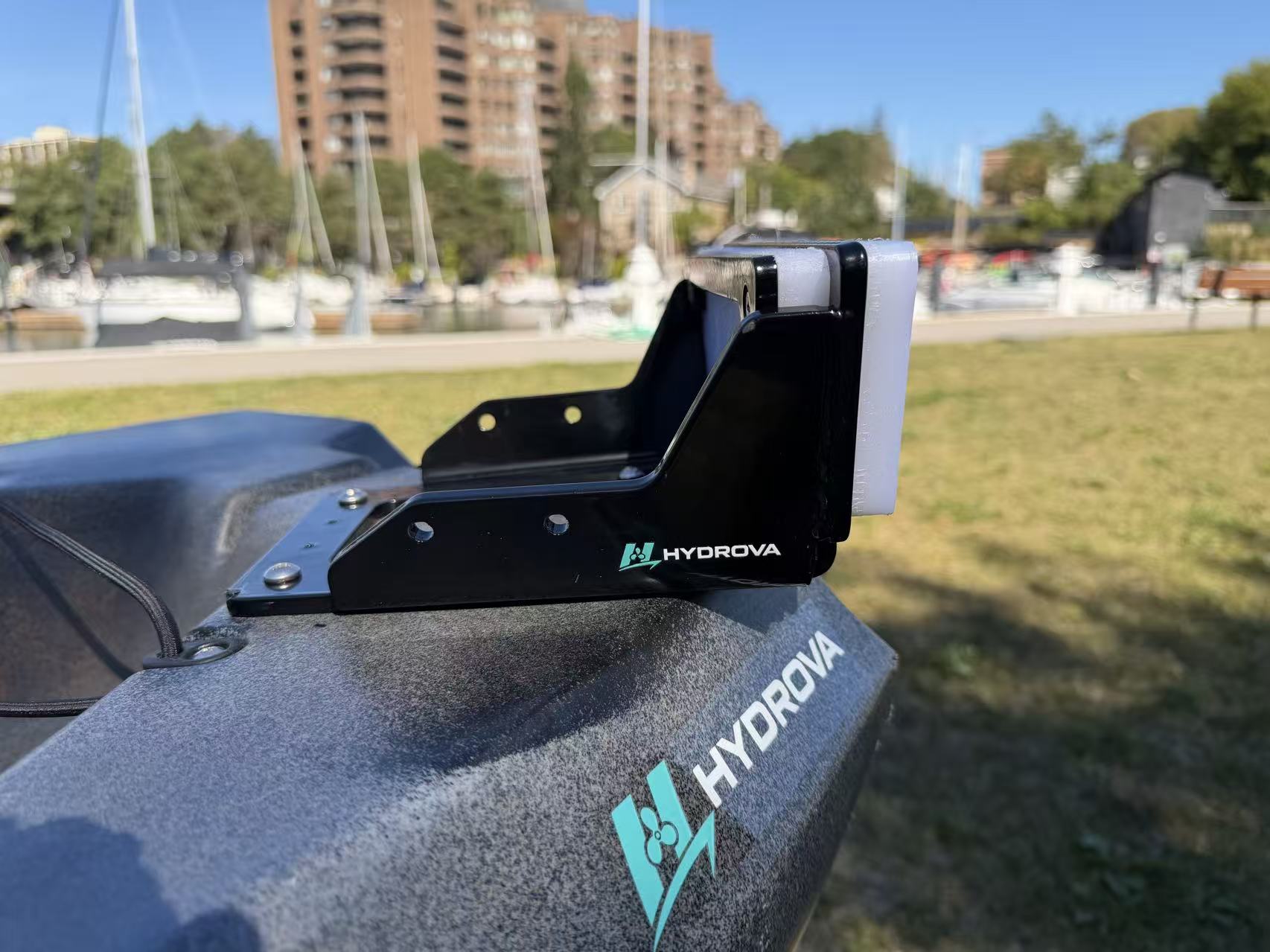
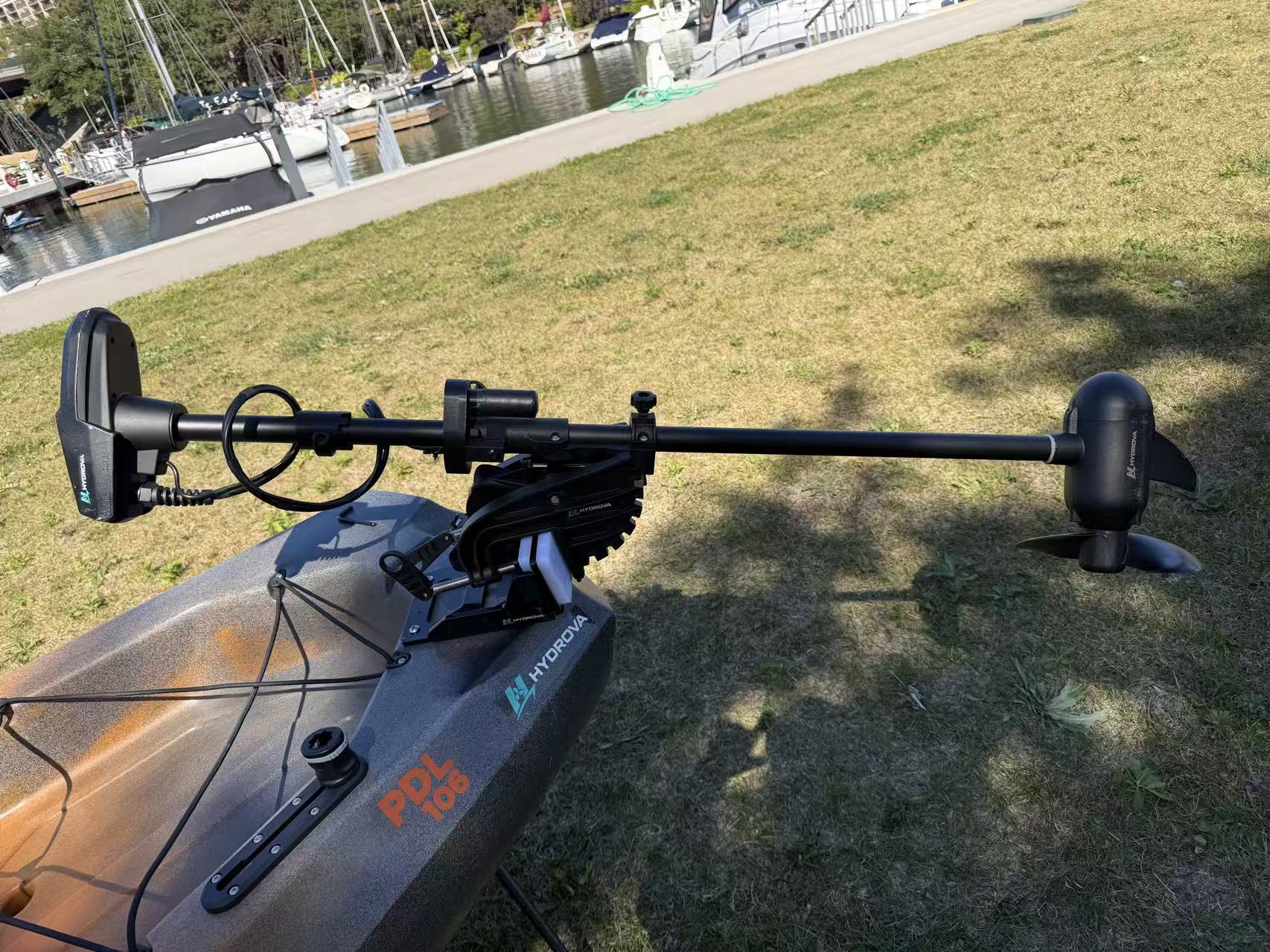
The Hydrova Travel GPS Spot-Lock Trolling Motor is designed for kayak and small-boat anglers who want electric propulsion combined with GPS position holding.
The system is designed around:
- GPS position holding
- Remote steering
- Electric propulsion
- Kayak-friendly installation
- Portable fishing applications
Depending on the kayak model, a mounting adaptor may be required.
GPS position holding can be especially useful for anglers who want to spend less time correcting kayak position and more time fishing.
Frequently Asked Questions
Is Spot-Lock better than an anchor?
They serve the same general purpose but have different strengths. Spot-Lock offers greater convenience and easier repositioning, while a traditional anchor requires no battery power.
Can Spot-Lock completely replace an anchor?
In many fishing situations it can reduce the need for a physical anchor, but carrying a traditional anchor or another backup positioning method can still be useful.
Does Spot-Lock work in deep water?
Yes. Because GPS position holding does not need to contact the bottom, it can be especially convenient in deep water.
Does Spot-Lock work in strong current?
It can, as long as the motor has enough available power to overcome the current. Strong current can significantly increase battery consumption.
Does an anchor use battery power?
No. A traditional physical anchor does not require electrical power.
Can you use Spot-Lock and an anchor together?
Yes. Carrying both can provide more flexibility and a backup positioning option.
Final Thoughts
Spot-Lock and traditional anchors are both useful tools for kayak fishing.
Spot-Lock offers:
- Fast electronic deployment
- Easy repositioning
- Deep-water capability
- Automatic wind correction
- Automatic current correction
A traditional anchor offers:
- No battery consumption
- Simple operation
- Reliable long-duration holding
- A useful backup system
For anglers who frequently move between locations or fish offshore structure, GPS position holding can make kayak control much easier.
For anglers staying in one place for long periods, a traditional anchor can still be extremely useful.
Many serious kayak anglers may benefit from having both options available.
Explore Hydrova GPS Trolling Motors
Advanced GPS position holding and electric propulsion designed for kayaks and small boats.
Hold Your Position. Focus on Fishing.